Lecture Series
Designed lecture decks with full, searchable transcripts — free to use for students and colleagues. No need to cite me; cite the giants who taught us to remain forever students.
Clinical Hematology Series
Benign Hematology
Laboratory Investigation in Hematology
The lecture the rest of the series rests on: what a reference range really is, where a result goes wrong between the patient and the screen, and how to read the CBC, the film, the coagulation screen and the rest without believing them too much.
Open the lecture →
The Clinical Approach to Anemia
A three-part clinical guide: classification and the microcytic / macrocytic workup, then acquired and hereditary hemolytic anemia.
Open the lecture →
Hb Electrophoresis: Essentials and How to Read It
How to read a hemoglobin electrophoresis report: the methods in use, the thalassemia and sickle patterns, the results that mislead, and seven cases.
Open the lecture →
Bleeding Disorders
One lecture, six patients: the two arms of hemostasis, four questions at the bedside, the first panel read as a pattern, and immune thrombocytopenia, von Willebrand disease, hemophilia, acquired hemophilia and DIC, each with its first-line care.
Open the lecture →
Introduction to Bleeding Disorders
Lecture 1 of 2: the physiology of hemostasis, then four questions for the patient who bleeds, with hemophilia and ITP as worked cases.
Open the lecture →
Disorders of Hemostasis
Lecture 2 of 2: the bleeding history and its score, reading the PT and aPTT, the mixing study, von Willebrand disease, platelet function disorders and DIC.
Open the lecture →
Introduction to Bleeding Disorders
The physiology of hemostasis — the platelet plug, the coagulation cascade (old vs new models), natural anticoagulants, and fibrinolysis — as a foundation for classifying bleeding disorders.
Open the lecture →
Disorders of Hemostasis
A clinical approach to bleeding: primary vs secondary hemostasis, the bleeding history and BAT, von Willebrand disease, coagulation-factor disorders, and PT / aPTT interpretation with mixing studies.
Open the lecture →Malignant Hematology
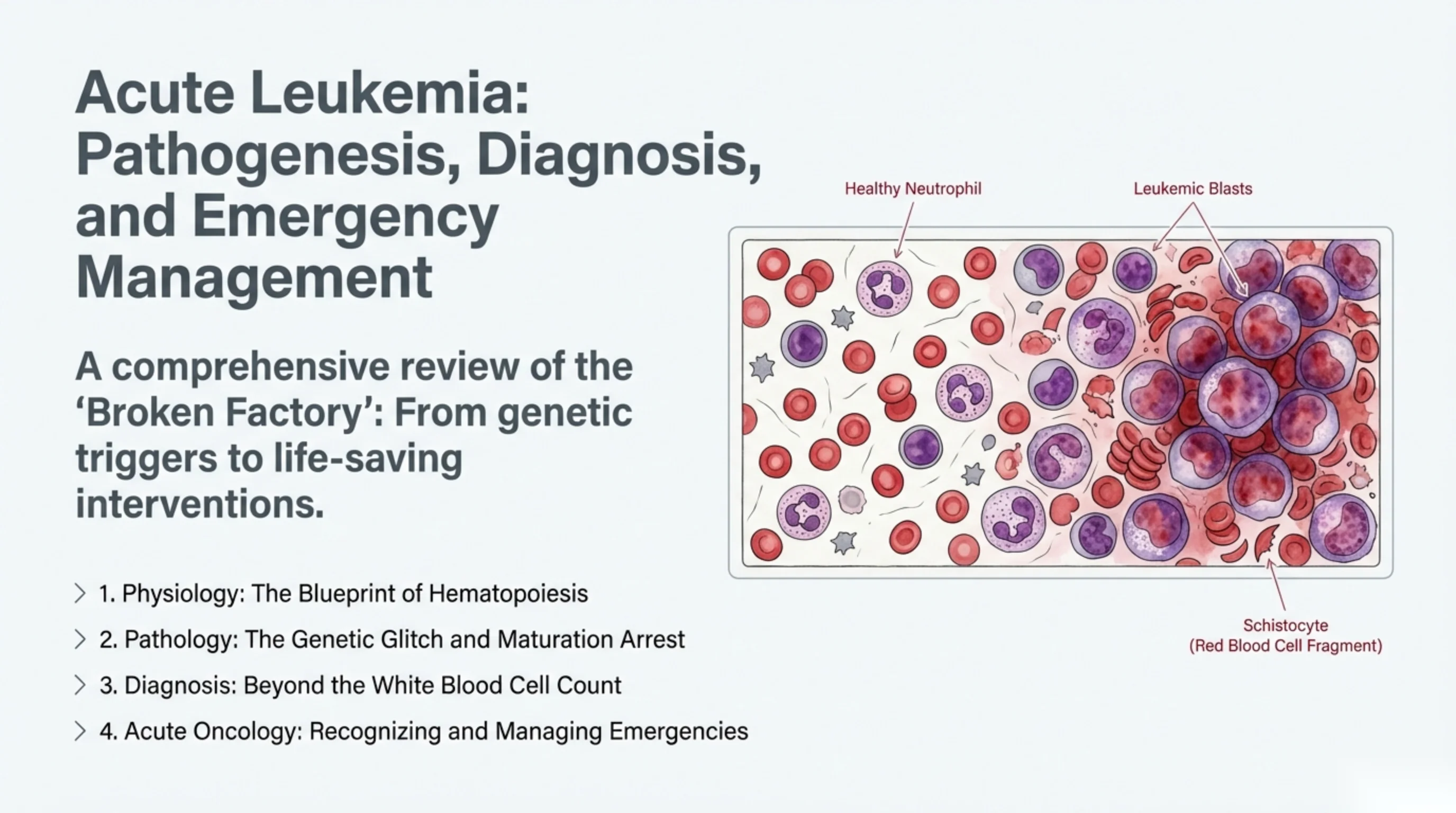
Acute Leukemia
Pathogenesis and diagnosis of acute leukemia, and the oncologic emergencies that make it a can’t-miss.
Open the lecture →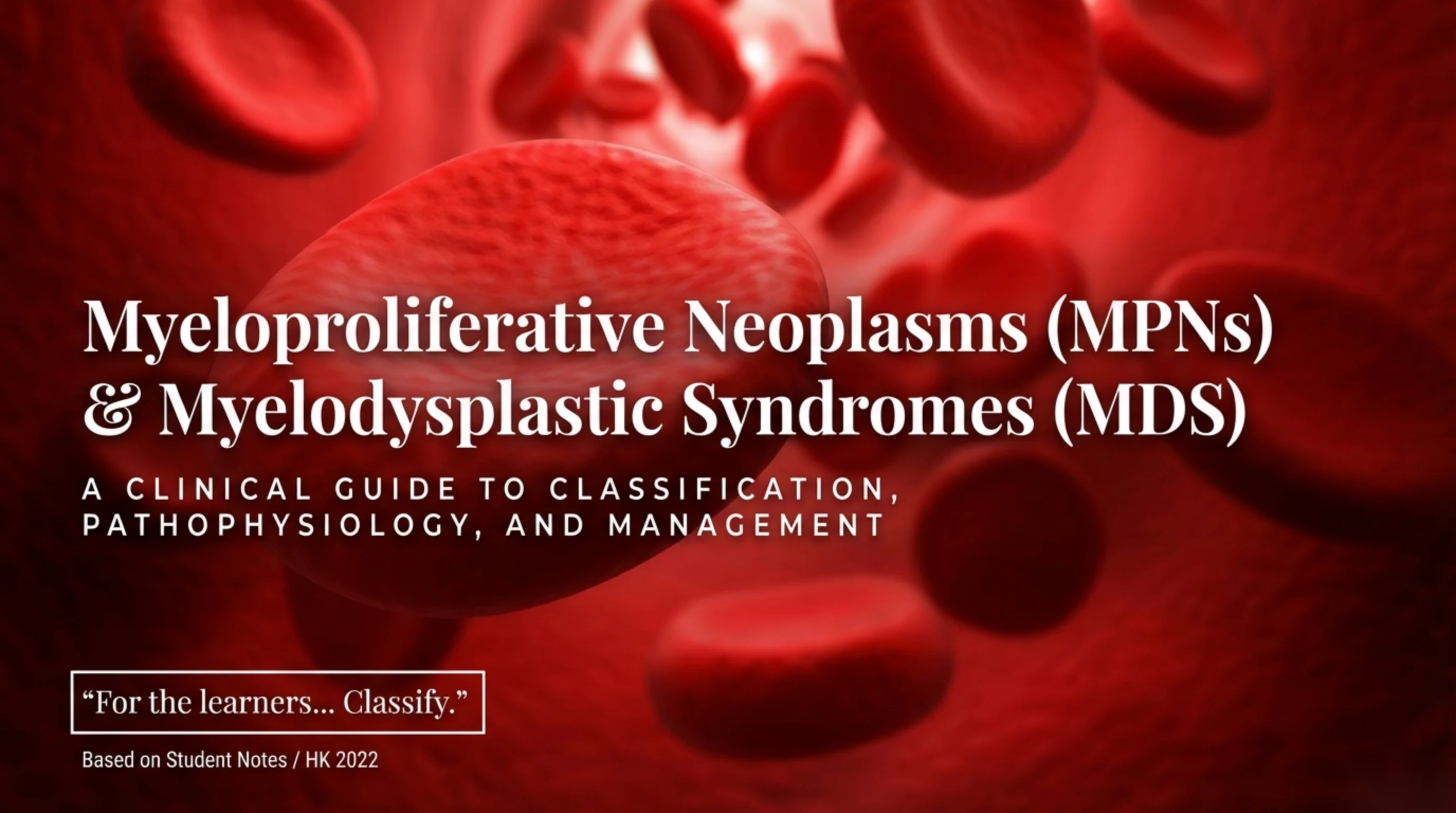
Myeloid Neoplasms
MPNs and MDS — from the broken JAK/STAT switch to WHO classification and management.
Open the lecture →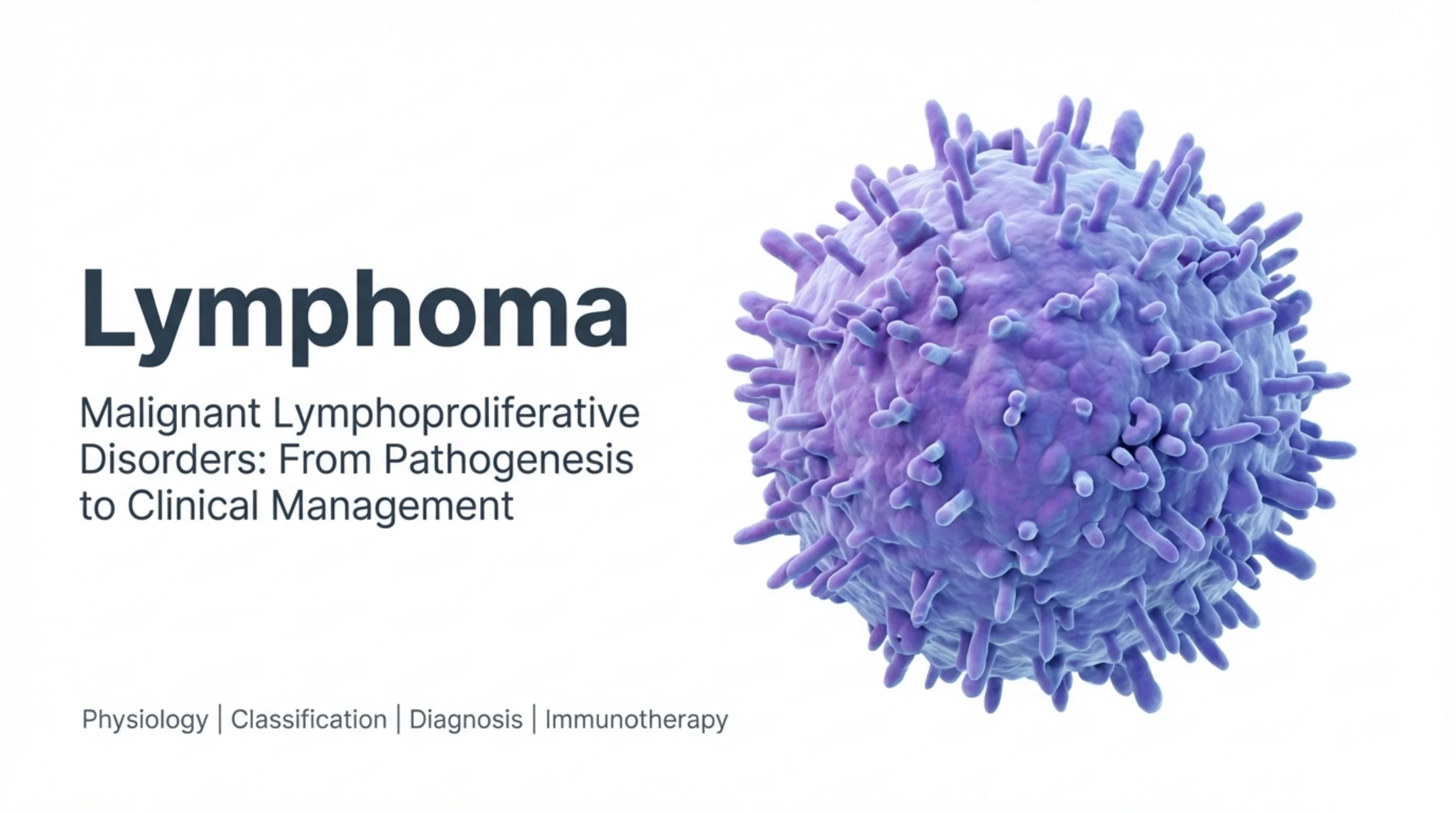
Lymphoma
Hodgkin and non-Hodgkin lymphoma — physiology, WHO classification, staging, tumor lysis, and immunotherapy.
Open the lecture →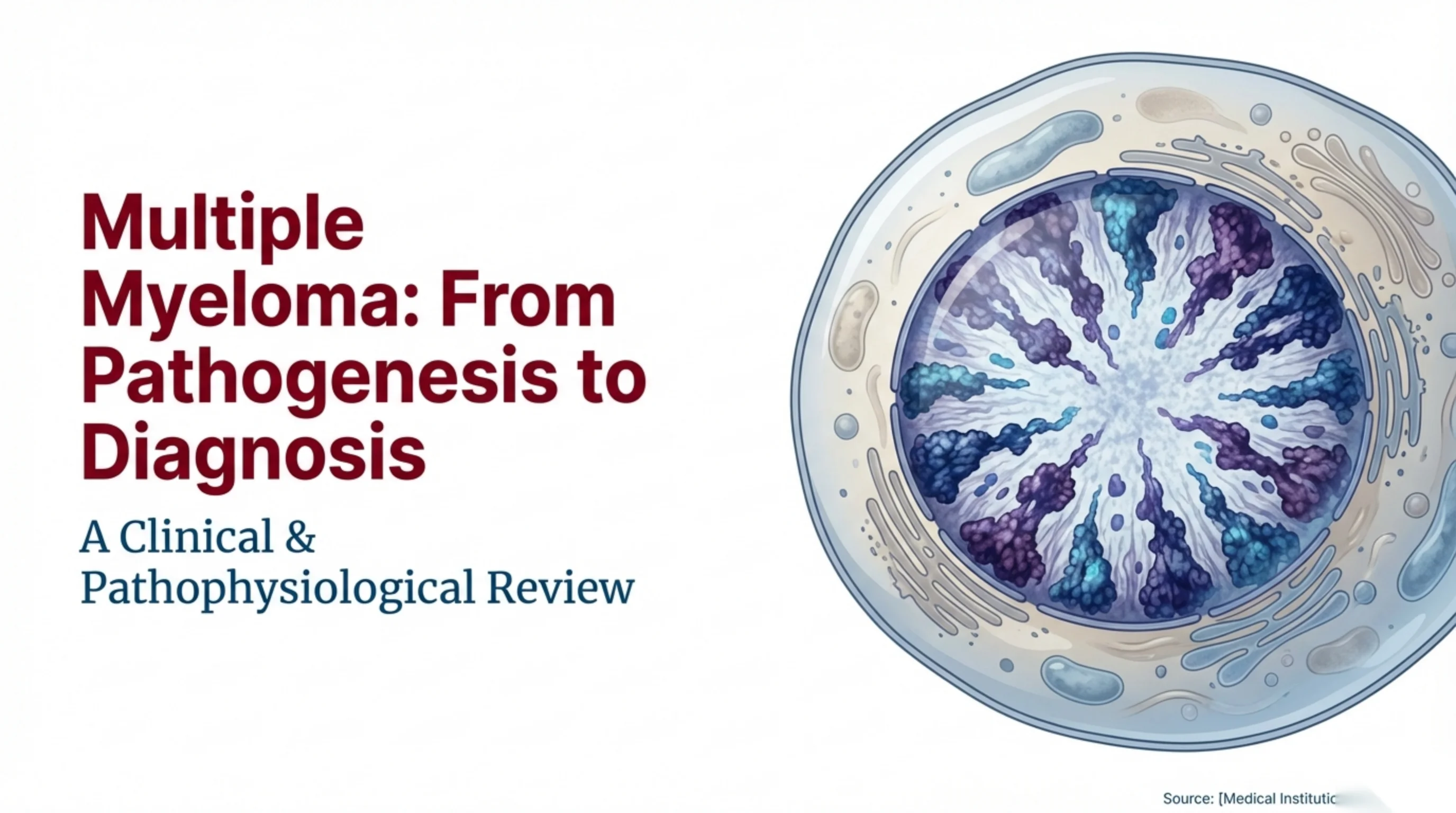
Multiple Myeloma
The plasma-cell clone from SPEP to the CRAB criteria and the diagnostic triad.
Open the lecture →More series added over time · each deck downloadable as PDF
Medical Ethics · MED 431
Introduction to the Course
Introduction to the course — the history of medical ethics: three decisions medical knowledge cannot settle, what makes something an ethical dilemma, and the six moments that changed what a doctor is allowed to do.
Open the lecture →
Rules and Regulation
Rules and regulation during undergraduate study and postgraduate training — the rules a student lives under at KKU, what changes in the internship year, and what the Law and the SCFHS Code require of every doctor in the Kingdom.
Open the lecture →
Academic Integrity and Copyright
Academic integrity and copyright — the six values, the violations by name, what the Saudi Copyright Law protects and permits, and how to write to your teachers.
Open the lecture →
Privacy and Confidentiality
Privacy and confidentiality — the circle of confidence, the narrow exceptions and the three tests, the family's request, the digital record, and four cases.
Open the lecture →
End-of-Life Care
Ethical consideration in the care of the elderly and end-of-life care — palliative care and double effect, brain death, withholding and withdrawing, DNR orders, the Islamic prohibition of euthanasia, and the care of the dying and the elderly.
Open the lecture →More MED 431 lectures
Posted as the term runs.
The course page carries the book, its question bank and the trainee edition — MED 431 →