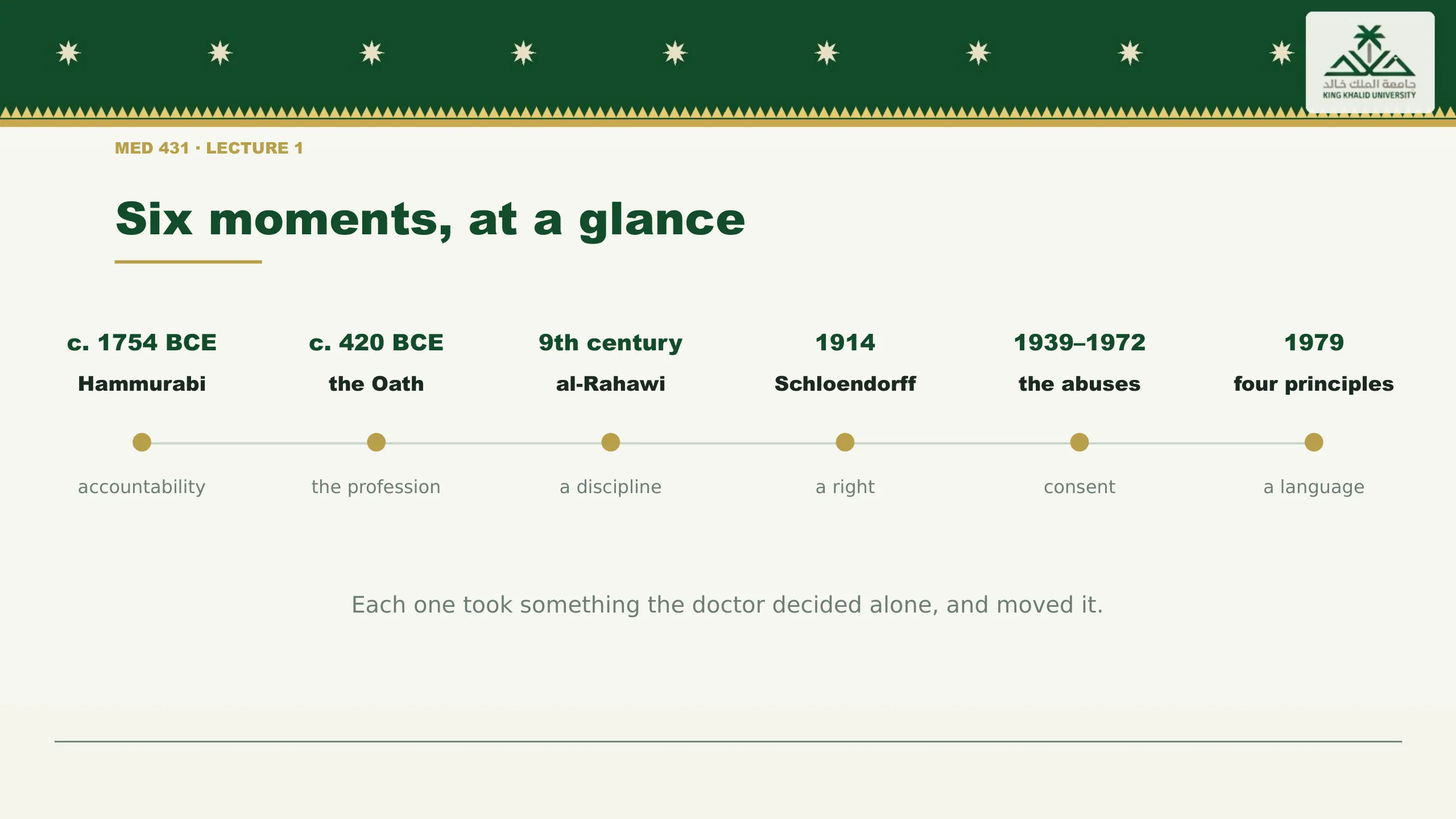
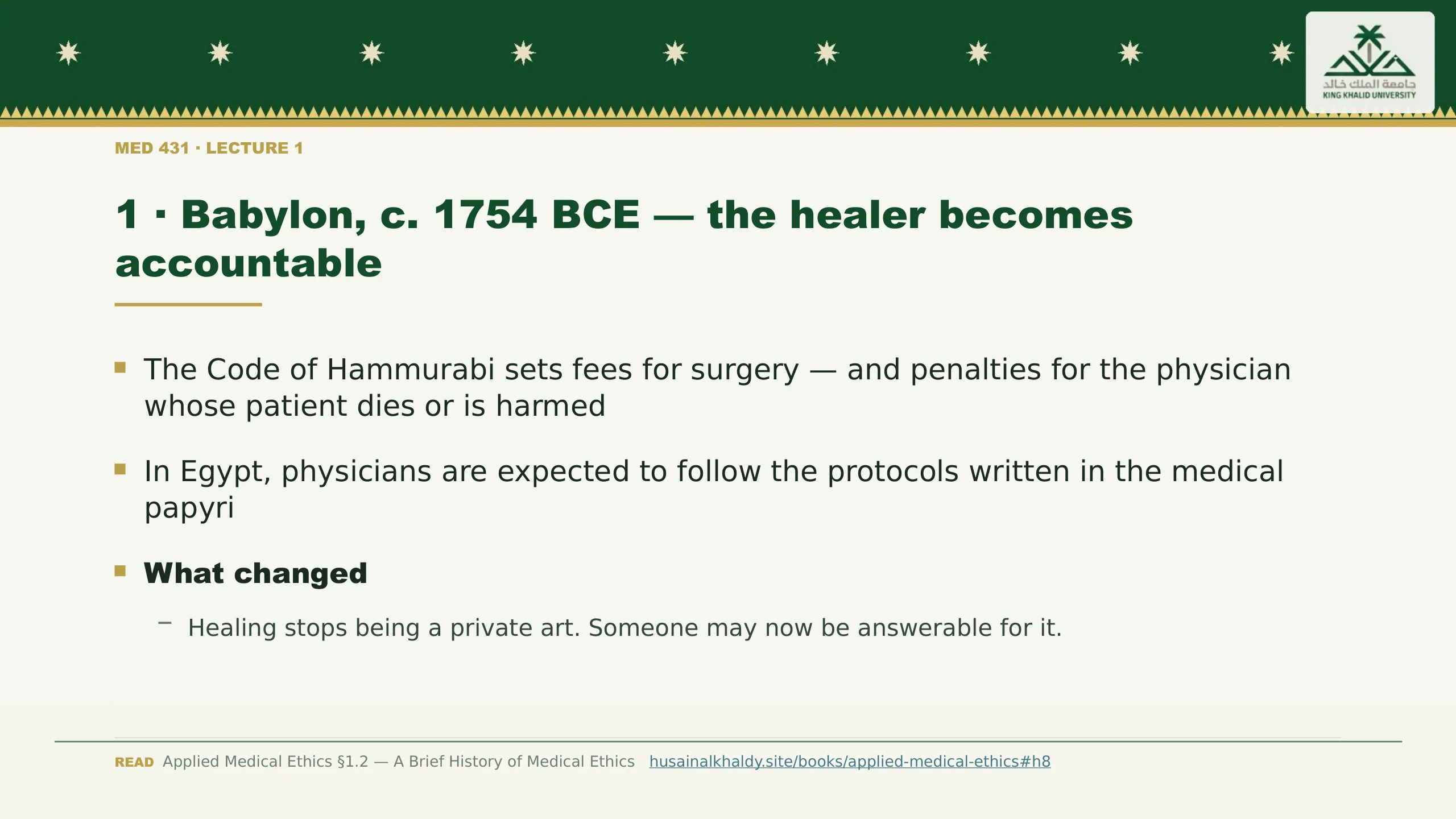
12. 1 · Babylon, c. 1754 BCE — the healer becomes accountable
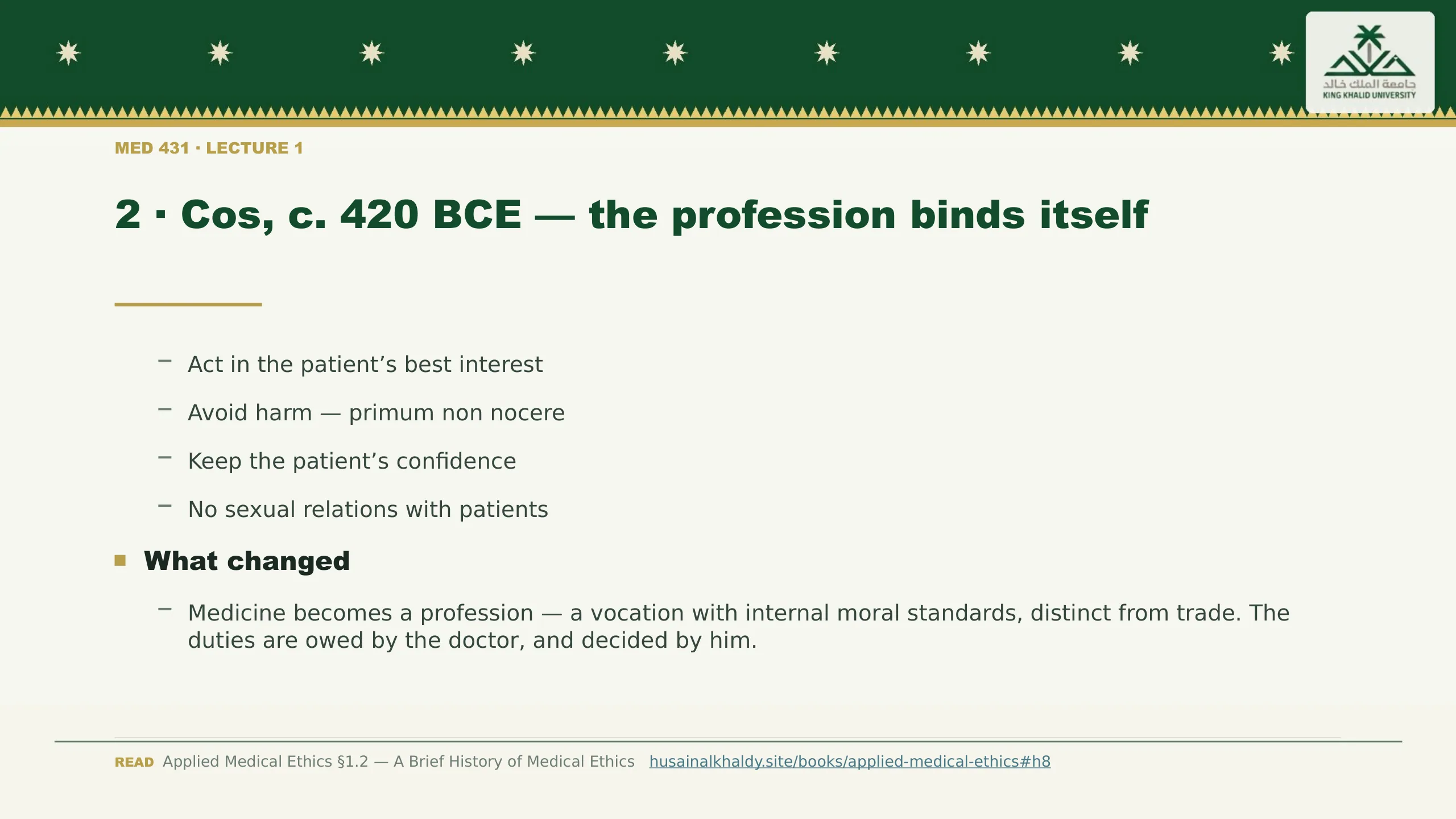
13. 2 · Cos, c. 420 BCE — the profession binds itself
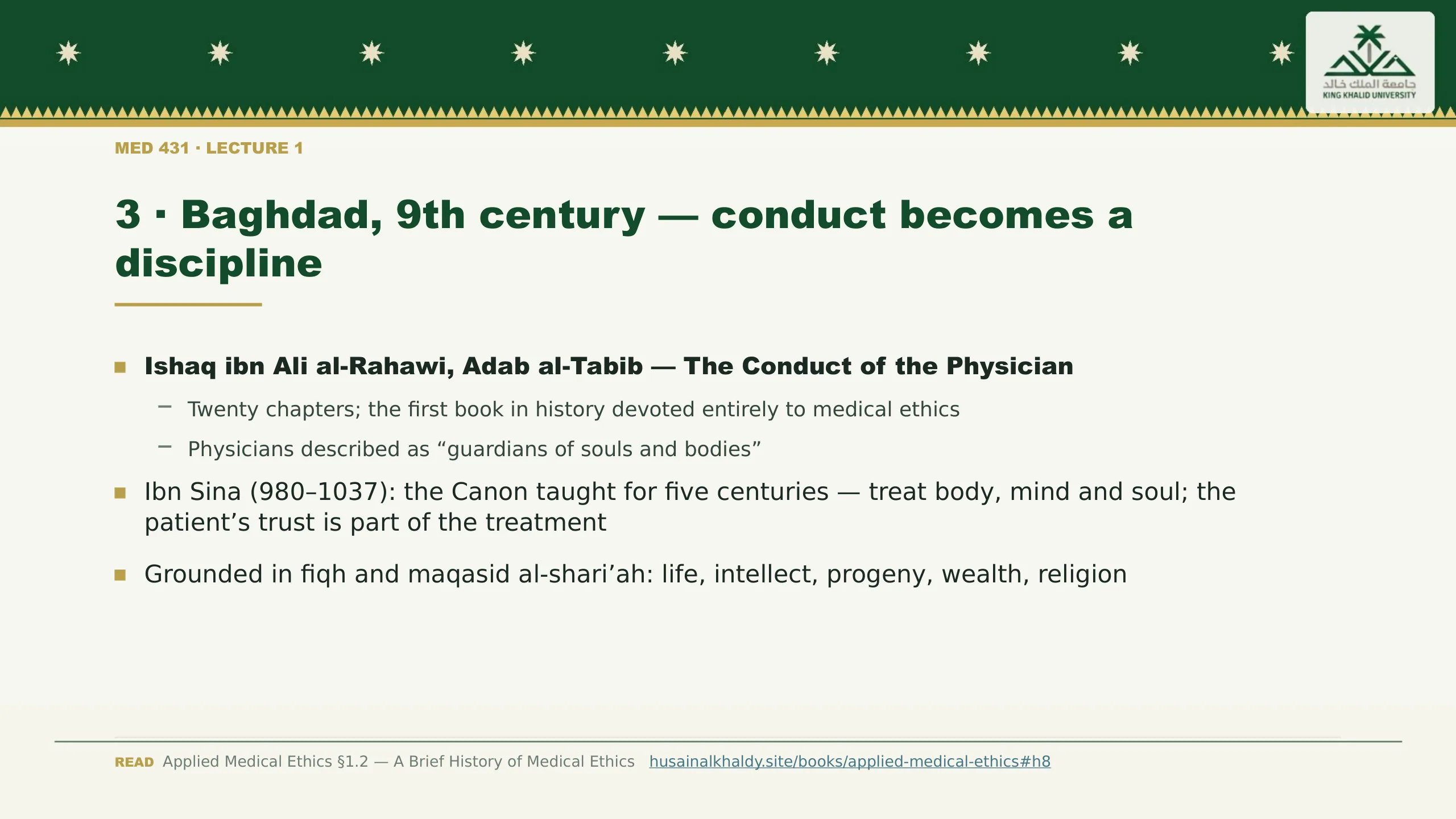
14. 3 · Baghdad, 9th century — conduct becomes a discipline
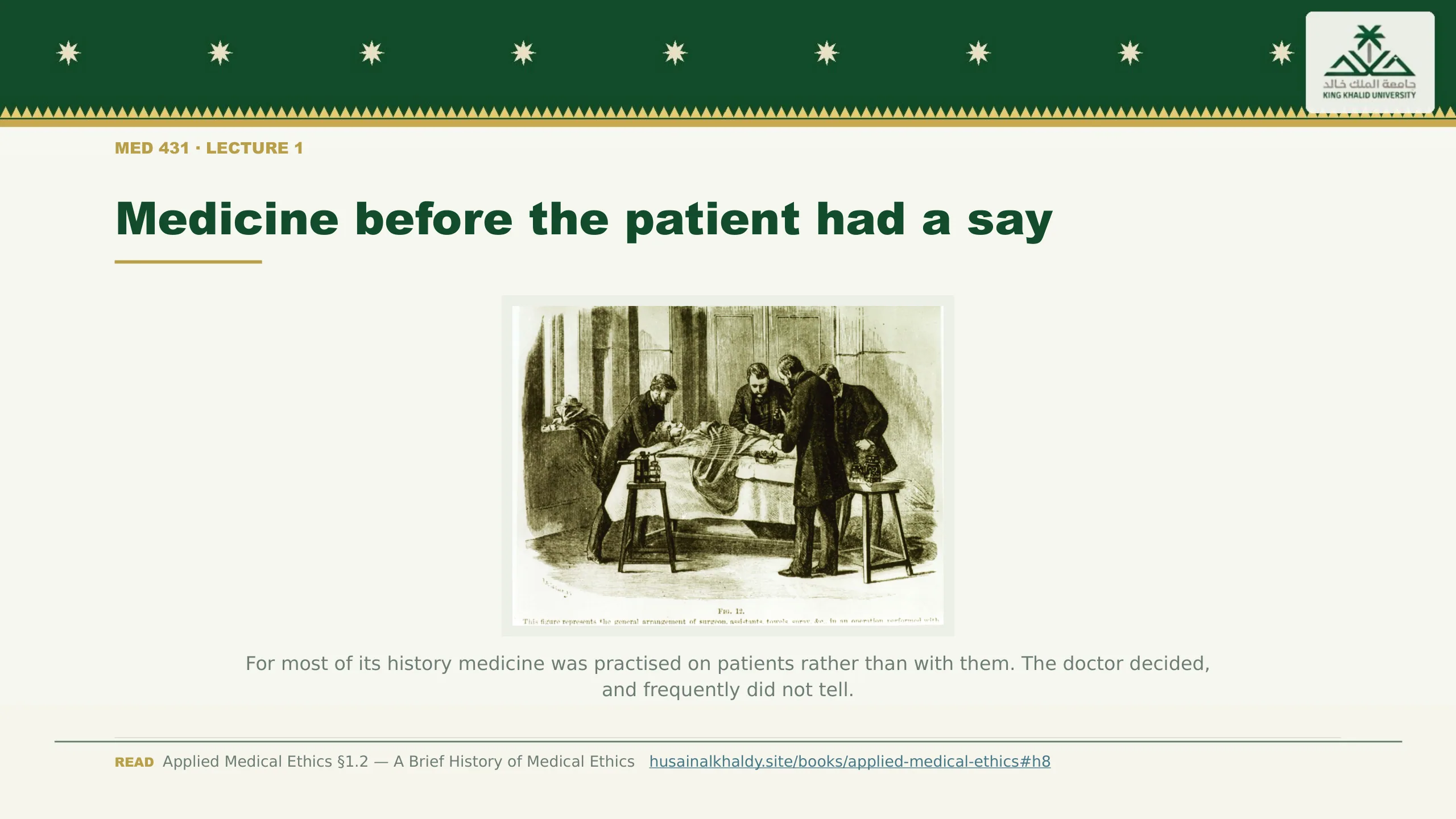
15. Medicine before the patient had a say
16. 4 · New York, 1914 — the patient acquires a right
17. “Every human being of adult years and sound mind has a right to determine what shall be done with his own body.” — Justice Benjamin Cardozo, 1914
18. What changed in 1914
19. 5 · The century of abuses
20. Nazi human experimentation — 1939 to 1945
21. Tuskegee, Alabama — 1932 to 1972
22. Guatemala — 1946 to 1948
23. Willowbrook — 1956 to 1970
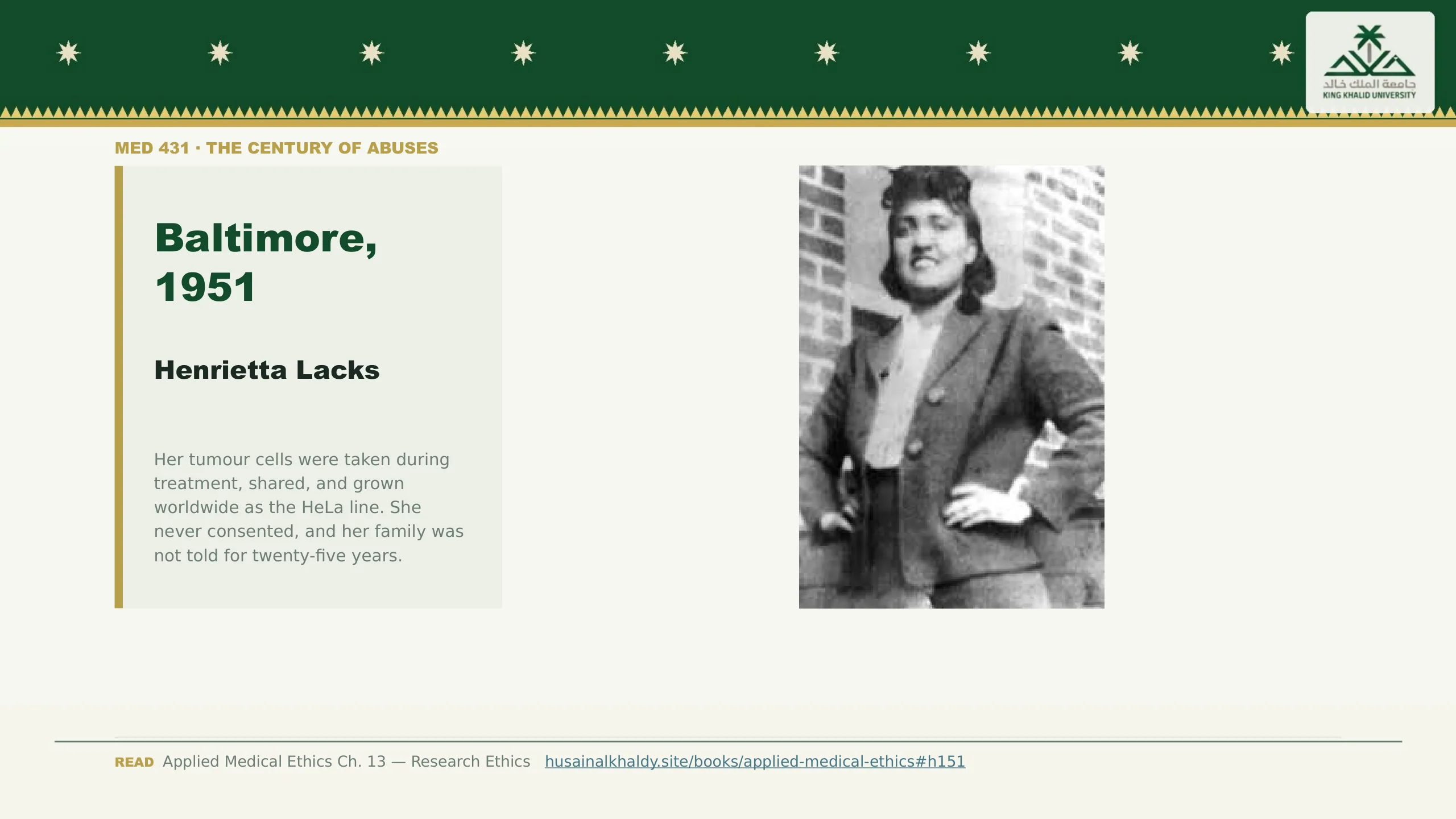
24. Baltimore, 1951 — Henrietta Lacks
25. Two things these have in common
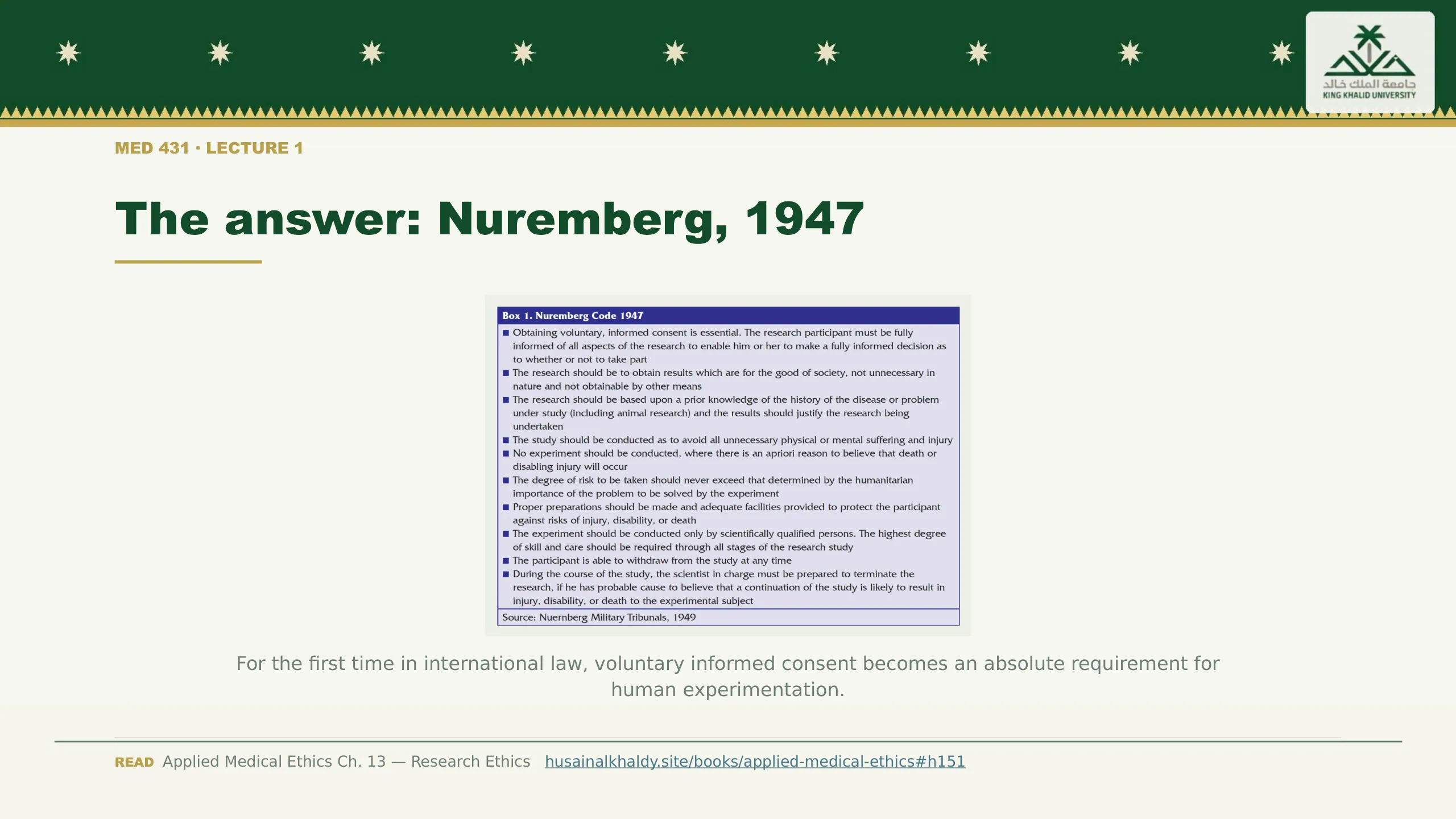
26. The answer: Nuremberg, 1947
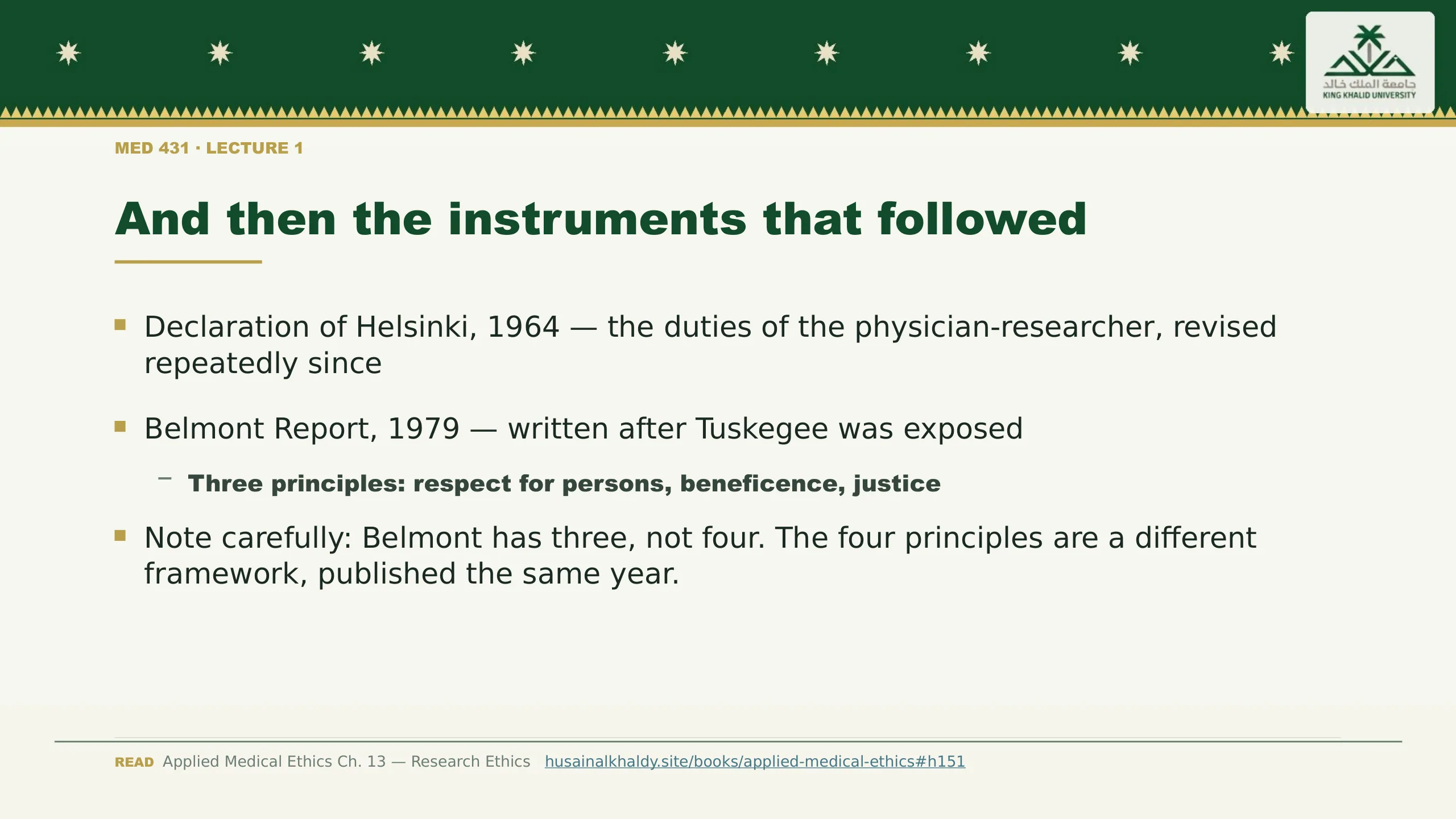
27. And then the instruments that followed
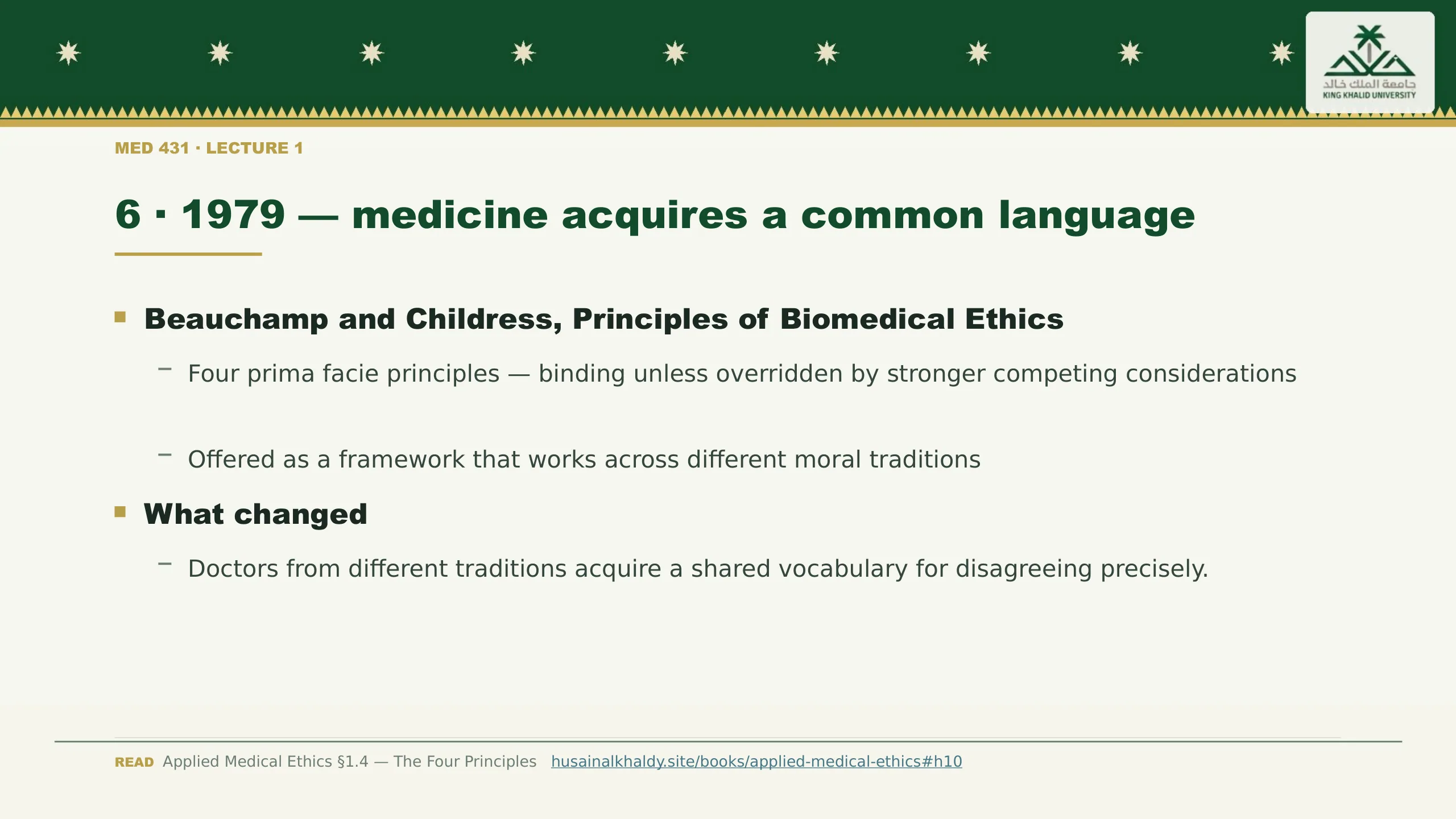
28. 6 · 1979 — medicine acquires a common language
29. The tools those six moments produced
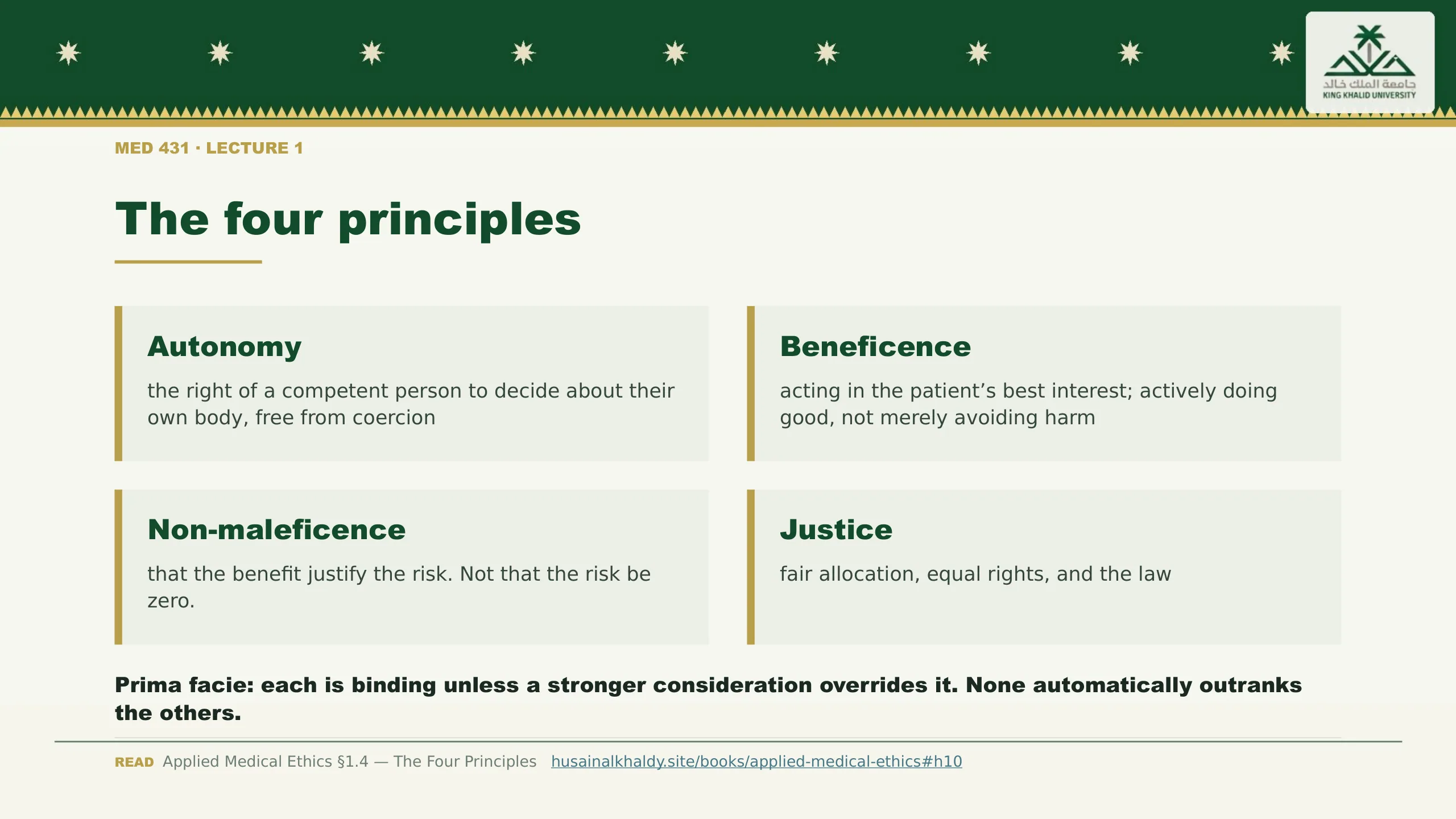
30. The four principles
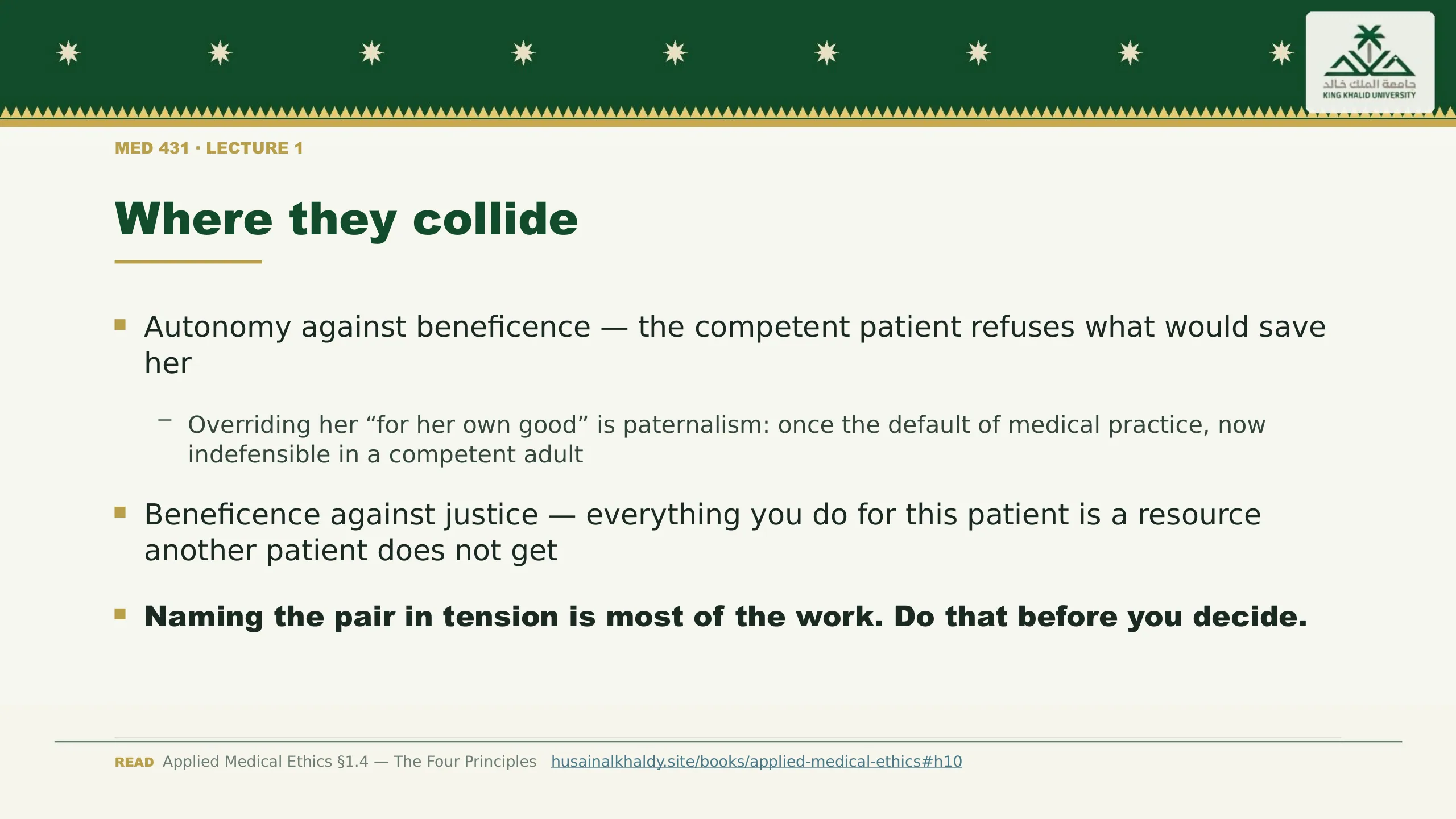
31. Where they collide
32. Three ways of arguing — and one more
33. Islamic ethical theory
34. Paternalism gave way to autonomy. Has the pendulum swung too far?
35. Now work one
36. The case
37. Work it in this order
38. How this course works
39. Two tracks, both examined
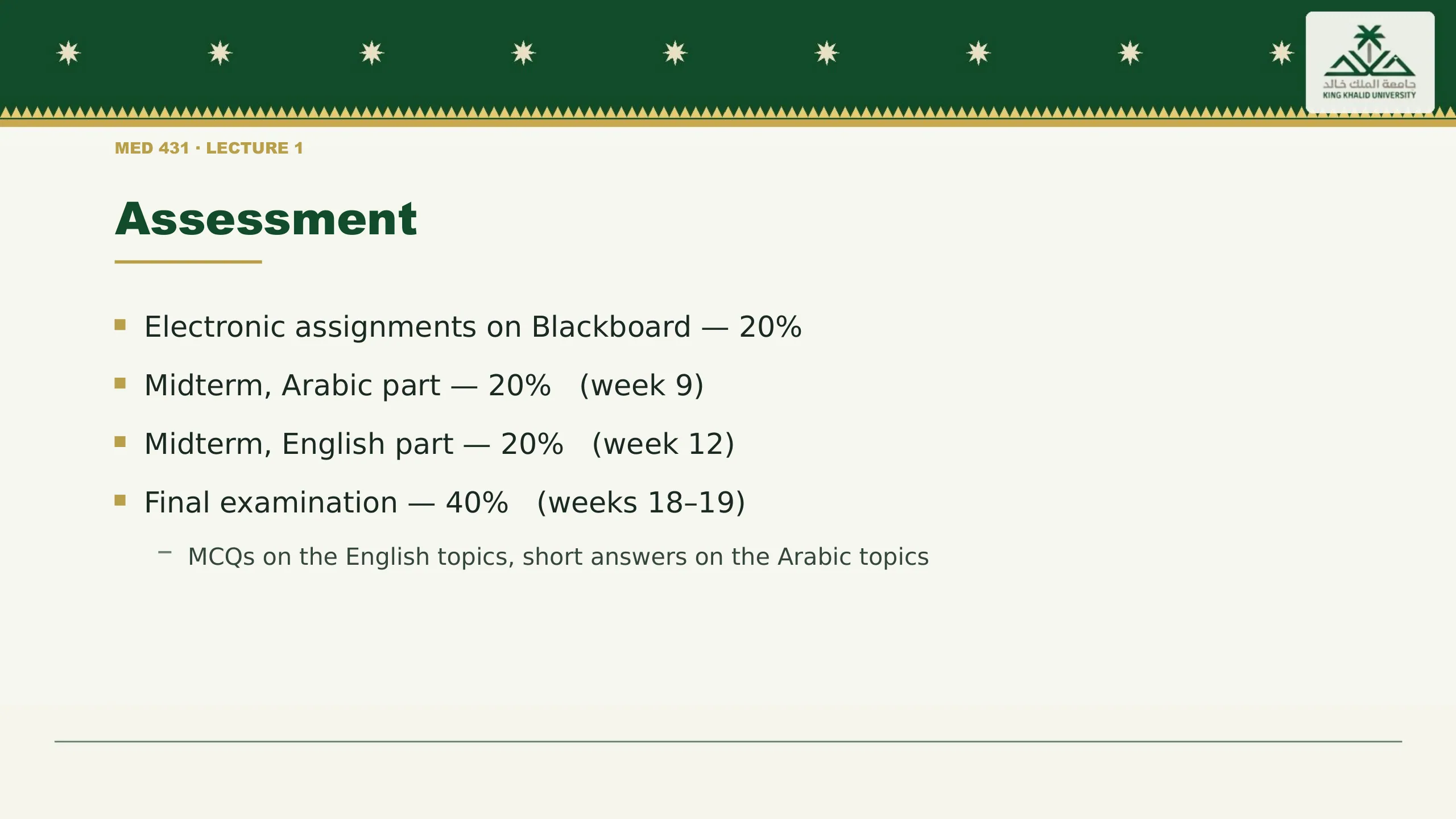
40. Assessment
41. What we will cover
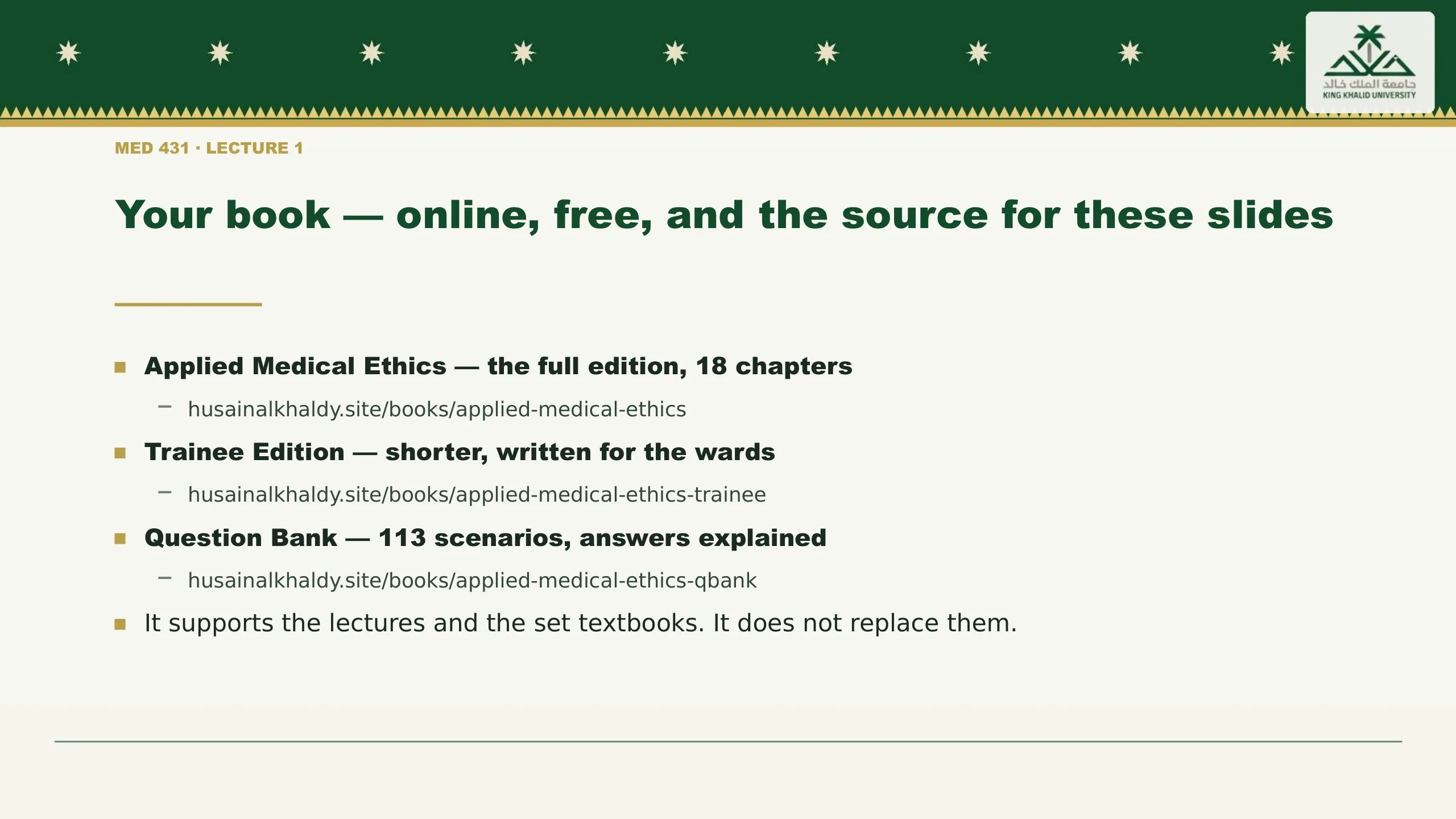
42. Your book — online, free, and the source for these slides
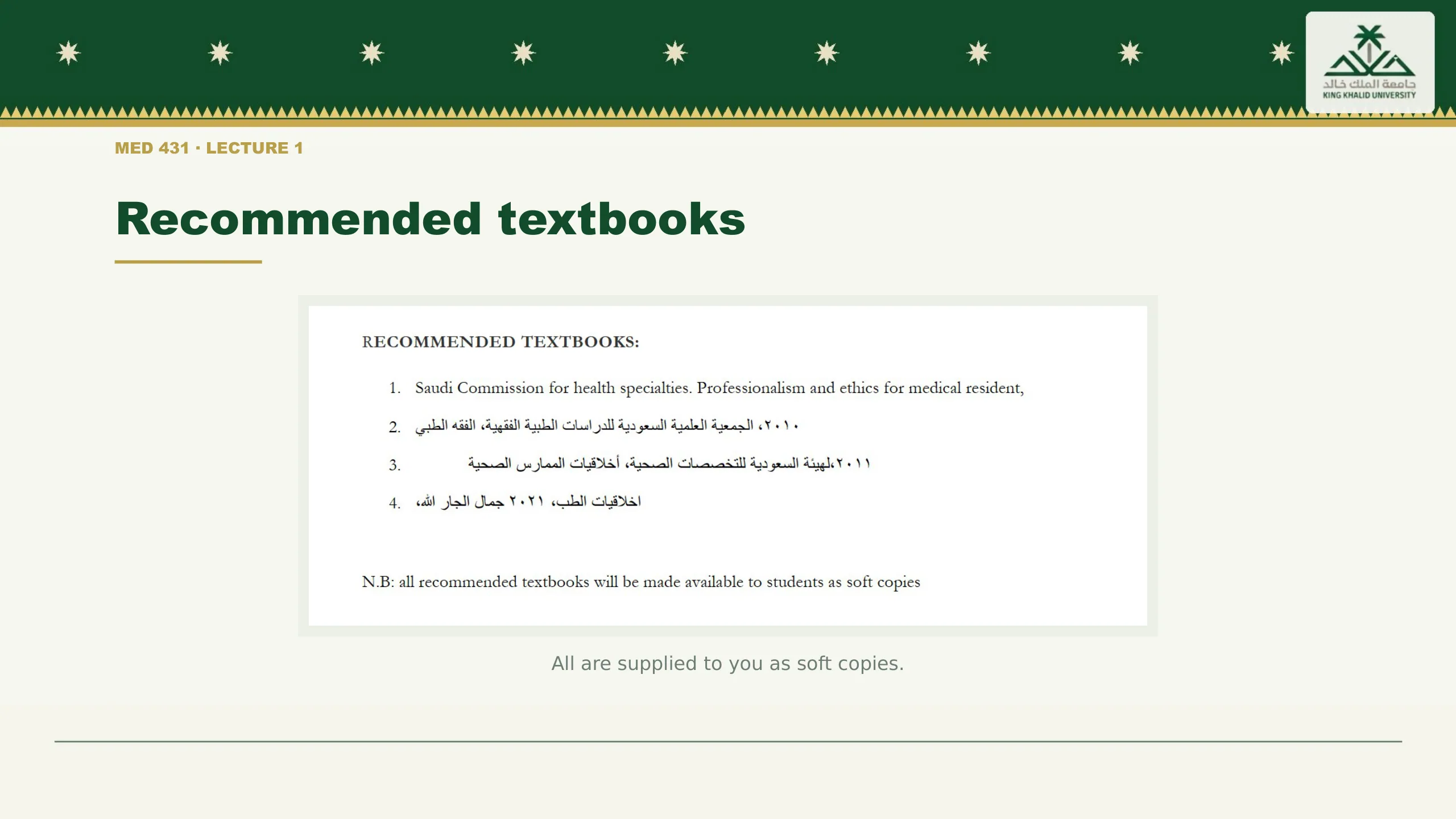
43. Recommended textbooks
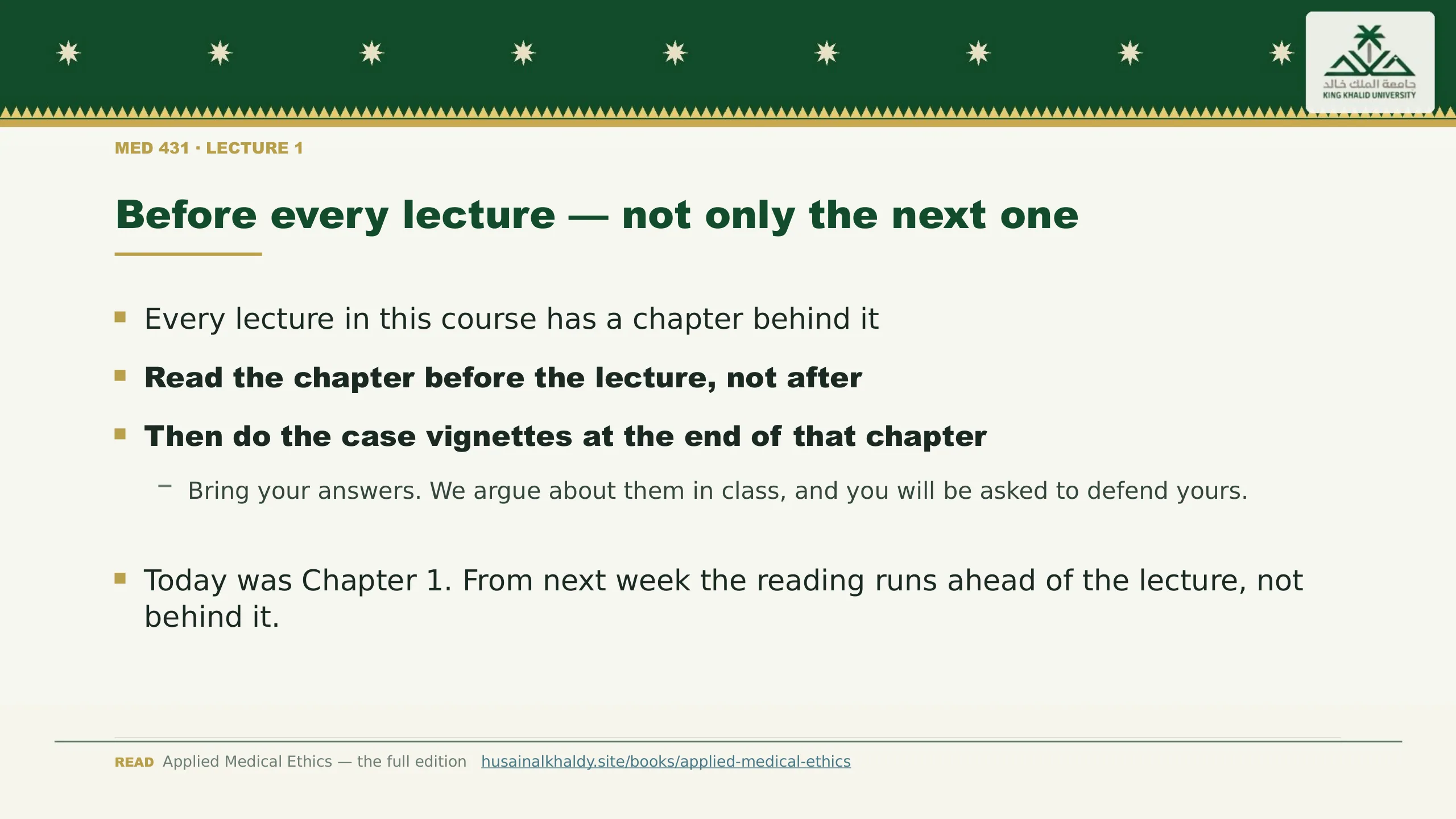
44. Before every lecture — not only the next one
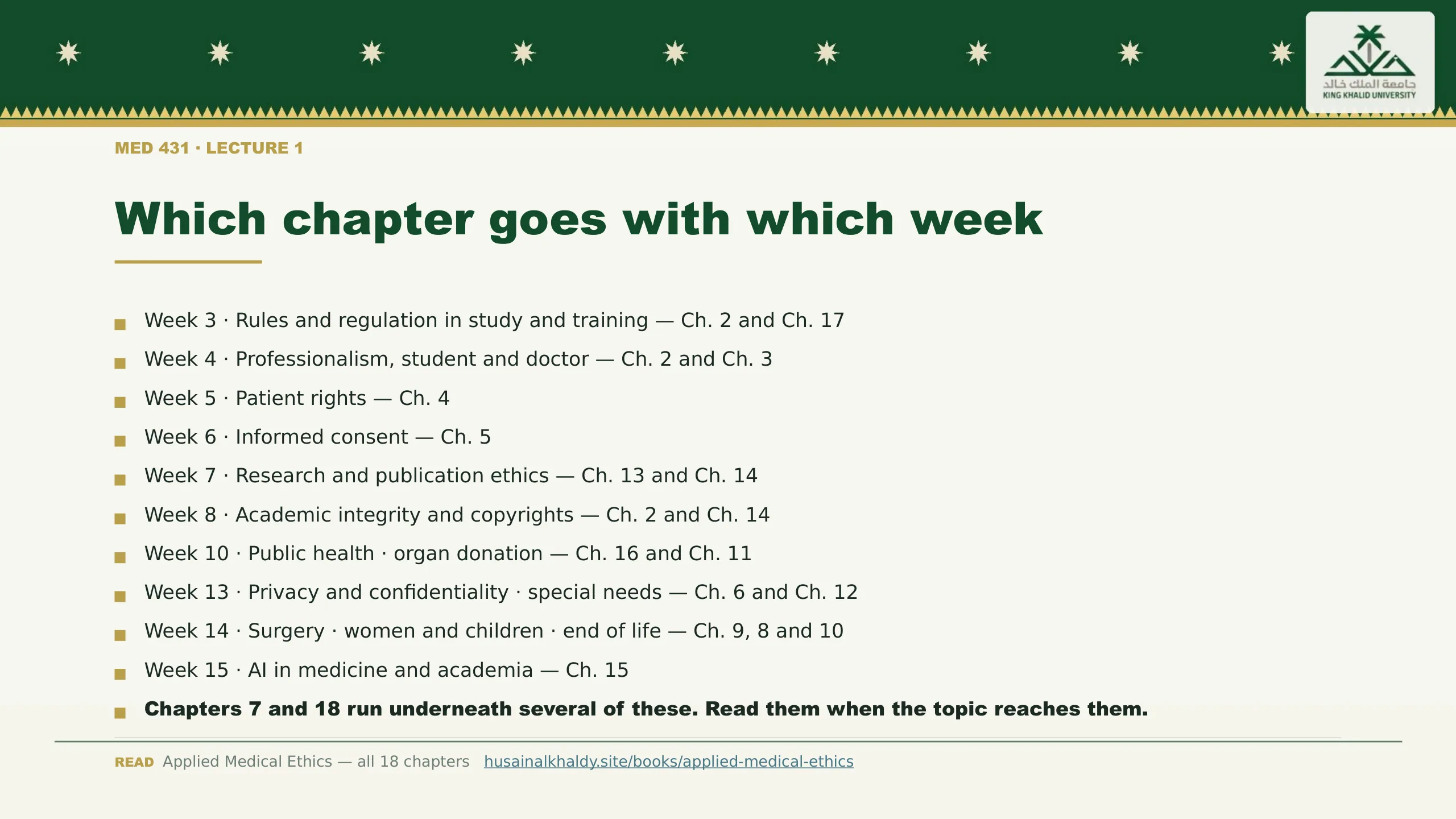
45. Which chapter goes with which week
46. And one more thing
47. Who decides?
Next
Before every lecture
Every lecture in this course has a chapter behind it. Read the chapter
before the lecture, then do the case vignettes at the end of it, and bring your
answers. This lecture was Chapter 1 —
What Is Medical Ethics?